
Cake Mix Sugar Cookies for Easy Baking in 2026
Table of Contents
Most bakers will not tell you this because admitting it feels like cheating: the softest, most reliable cake mix sugar cookies you’ll ever make don’t come from a from-scratch recipe. They come from a box. Specifically, they come from mixing three ingredients, a yellow or white cake mix, two eggs, and half a cup of oil, then sliding them into a 350-degree oven for nine minutes. What emerges is a cookie that tastes nothing like a boxed cake, feels like a bakery item, and requires zero mixer, zero resting time, and zero guesswork.
The reason this works is not magic. It is ingredient science. Cake mixes are engineered to be forgiving. They contain pre-balanced flour, leavening, salt, and emulsifiers that have already been dialed in by food scientists. You are not fighting the dough. You are not wondering if your cookies will spread too thin or bake up dense. You are simply following a formula that works, every single time, and then decorating it however you want.
This is the fastest route to cookies that look and taste like you spent an afternoon in the kitchen.
Why Are Cake Mix Sugar Cookies So Popular?
The appeal is simple: speed meets reliability. A traditional cake mix sugar cookies dough requires creaming butter and sugar, whisking in eggs, sifting flour, and managing hydration ratios that shift based on humidity, room temperature, and the mood of the kitchen gods. One wrong move and you have either dense hockey pucks or cookies that spread into translucent puddles across the baking sheet.
Cake mix sugar cookies eliminate that entire category of failure. The box has already done the engineering. Flour is pre-sifted and balanced. Leavening is measured. Emulsifiers are built in. Your job is to add fat, moisture, and heat. That is it.
But the real reason bakers keep coming back to this method is the texture. Cake mixes contain ingredients that traditional recipes do not. They have cornstarch, which tenderizes the crumb and keeps cookies soft for days. They have mono and diglycerides, which trap moisture and prevent the hard, stale edge that homemade cookies develop after 48 hours. They have enough leavening to create a cookie that is cakey in the best sense: light, airy, with a tender crumb that yields to your teeth instead of requiring a jaw workout.
This is not a shortcut to inferior cookies. It is a shortcut to a texture profile that most home bakers cannot achieve from scratch without trial and error.
The Science of Using Pre-Mixed Flour and Leavening
When you open a box of cake mix cookies, you are holding the result of decades of refinement by food scientists who were tasked with one goal: make it impossible to fail. The flour is already milled to a specific protein level. The leavening (baking powder and baking soda) is measured and pre-mixed so the ratio is always correct. The salt is there to enhance sweetness and balance flavor. The emulsifiers are there to bind water and fat together, creating a stable dough that does not separate or weep.
This consistency is what you lose when you make dough from scratch. Your flour changes based on humidity. Your baking soda strength varies based on how old the box is. Your butter might be slightly warmer or colder. These tiny variables compound, and suddenly your Tuesday batch is different from your Thursday batch.
With cake mix, that variation disappears. Every box of yellow cake mix from the same manufacturer contains the same ratios, the same particle size, the same leavening charge. When you add your eggs and oil, the dough behaves the same way it did the last time you made it, and the time before that. The oven heat does the rest, and because the formula is engineered for forgiving baking, even if your oven runs 10 degrees hot or your baking sheet is dark instead of light, the cookies still turn out soft and chewy.
Comparing Homemade vs. Cake Mix Cookie Textures
A traditional homemade sugar cookie is built on a foundation of creamed butter and sugar. This creaming step incorporates air into the dough, which creates lift. The result is a cookie that is crisp on the outside and tender within, with a fine, delicate crumb structure. It is delicious, but it is also fragile. After two days, it hardens. After three days, it tastes like it belongs in a stale cookie jar at a dentist’s office.
A cake mix cookie is built on a different principle. Instead of relying on air incorporation from creaming, it relies on chemical leavening (the baking powder and soda already in the mix) plus the moisture from the eggs and oil. This creates a dough that is denser going in but bakes up tender, moist, and almost cakey in its structure. The cornstarch in the mix further softens the crumb by interfering with gluten development. The result is a cookie that stays soft for days, has a tighter, more uniform crumb, and has a slightly chewy center even after it cools completely.
If you prefer a crisp, delicate cookie that shatters between your teeth, homemade is your recipe. If you prefer a soft, chewy cookie that tastes like a bakery item and stays that way in a container for a week, cake mix is the answer. There is no right choice. There is only what you actually want to eat.
What Ingredients Do You Need for Cake Mix Cookies?
The base recipe is genuinely simple. One box of cake mix, two eggs, and half a cup of vegetable oil. That is the formula that appears across multiple tested sources, and it works because the ratio of dry to wet is calibrated for a dough that is scoopable, holds its shape, and does not spread into thin wafers.
Why vegetable oil instead of butter? Vegetable oil is liquid at room temperature. Butter is solid. When you use butter in a cookie dough, you have to cream it with sugar first to incorporate air, or you have to melt it and adjust your liquid ratios. Vegetable oil skips all of that. It mixes instantly, distributes evenly, and creates a dough with the right fat content and hydration without any fussing. This is not a compromise. It is precision. The oil creates a tender, moist cookie with the exact texture the cake mix formula was engineered to deliver.
The eggs do two things: they add moisture and they add binding power. Two eggs per box is the standard, and it is correct. One egg and you have a dough that is too dry and crumbly. Three eggs and you have batter that spreads too thin. Two eggs is the sweet spot.
Choosing the Best Oil and Egg Ratios
Half a cup of oil per box of mix is the baseline, and it is where you should start. This ratio creates a dough that is soft enough to scoop with a cookie scoop or spoon, but firm enough that the cookies hold their shape in the oven instead of spreading into thin discs.
If you find your dough is too dry and crumbly, add oil one tablespoon at a time until the dough comes together. If you find it is too wet and sticky, add a tablespoon of flour from your pantry and mix it in. But in most cases, the half-cup baseline works on the first try.
The two-egg standard is equally reliable. Room-temperature eggs mix in more smoothly than cold eggs straight from the refrigerator, so if you have time, leave them on the counter for 15 minutes before cracking them into the bowl. But do not stress about this. Cold eggs will still mix in. It just takes a few more stirs.
One detail that matters: use large eggs, not medium or extra-large. A large egg weighs about 50 grams and contains roughly 17 grams of water. If you use extra-large eggs, your dough becomes too wet. If you use medium eggs, it becomes too dry. Large eggs are the standard for a reason.
Enhancing Flavor with Extracts and Spices
The base three-ingredient recipe tastes good, but it tastes like cake. If you want it to taste like a real sugar cookie instead of a dessert that happens to be in cookie form, you need to add flavor.
The fastest fix is vanilla extract. One teaspoon of vanilla per box of mix masks the boxed taste and adds depth. Almond extract is even better if you want a more sophisticated flavor. Half a teaspoon of almond extract plus one teaspoon of vanilla creates a cookie that tastes like a professional bakery made it. The almond extract is subtle, but it changes the entire flavor profile.
If you want to go further, add a quarter teaspoon of nutmeg or a pinch of cardamom. These warm spices complement the vanilla and make the cookie taste less one-dimensional. You can also add the zest of half a lemon or half an orange to the dough. The citrus oils brighten the flavor and add complexity without making the cookie taste like lemon or orange. It just tastes more interesting.
The key with all of these additions is restraint. You are not trying to overpower the cookie with flavor. You are trying to round out the taste so it does not read as “boxed.” A teaspoon of vanilla is enough. A teaspoon of almond extract plus a teaspoon of vanilla is enough. More than that and you have a cookie that tastes like you were trying too hard to hide the mix.
How Do You Make Yellow Cake Mix Cookies From Scratch?
Yellow cake mix is the classic choice for this recipe, and for good reason. The butter flavor in yellow cake mix is more pronounced than white cake mix. It creates a cookie that tastes rich and slightly buttery, even though you are using oil instead of actual butter. This is not a flaw. It is the entire point. You get the buttery flavor without the hassle of creaming.
The step-by-step process is straightforward, but the details matter. Start by pouring the entire box of yellow cake mix into a large bowl. Do not sift it. Do not aerate it. Just pour it in. Then add your two eggs and your half cup of vegetable oil. Stir with a wooden spoon or a rubber spatula, not an electric mixer. You are not trying to incorporate air. You are trying to combine the dry and wet ingredients until you have a cohesive dough.
This takes about 30 to 40 seconds of stirring. You will see streaks of dry mix at first, then the dough will come together into a ball. Stop stirring the moment it is combined. Do not keep mixing. Overmixing develops gluten, which toughens the cookie. You want the dough to be mixed just enough to hold together, nothing more.
At this point, if you want to add vanilla, almond extract, or spices, stir them in. Then, if you have time, chill the dough for 30 minutes. If you do not have time, you can bake it immediately. The chill is not essential, but it helps the cookies hold their shape better in the oven and prevents excessive spreading.
Mixing the Dough to Avoid Overworking Gluten
The most common mistake people make with any cookie dough is mixing it too much. They use an electric mixer, or they stir for a full minute, or they keep stirring even after the dough is combined. This develops gluten, which makes the cookies tough and chewy in the wrong way. You want chewy from moisture and cornstarch, not chewy from overworked gluten.
The solution is simple: mix by hand with a spoon or spatula, and stop the moment the dough comes together. A few streaks of flour are fine. Keep stirring until they disappear, then stop immediately. Your dough should look slightly shaggy at first, then gradually come together into a cohesive mass. Once it is one ball, you are done. Do not keep going. Do not make it smooth. Do not try to make it perfect.
This is the opposite of how you make cake batter, where you want to mix until the batter is smooth and well-combined. With cookies, rough is good. Rough means you have not developed too much gluten, and your cookies will be tender.
Chilling Requirements for the Perfect Shape
If you have 30 minutes, chill the dough. If you do not, skip it. This is the most honest thing you can say about chilling cookie dough.
Chilling does help. It allows the fats in the dough to solidify, which means the cookies spread less in the oven and hold their shape better. It also gives the flavors time to meld, which makes the finished cookie taste more cohesive. But it is not mandatory. Cake mix dough is forgiving enough that you can bake it straight from the bowl and still get good results.
If you do chill, 30 minutes is enough. You do not need to chill overnight. You do not need to chill for two hours. 30 minutes is the sweet spot. The dough will be firm enough to scoop without sticking to your hands, and the cookies will bake up with slightly more height and less spread.
One pro tip: if you chill the dough and it becomes too hard to scoop, let it sit on the counter for five minutes before scooping. It will soften just enough to be workable.
Which Cake Mix Christmas Cookie Recipes Are Best for Gifting?
Holiday season is when cake mix cookies shine. They bake up reliably, they stay soft for days, they take decoration beautifully, and they look like you paid someone to make them. This is the time of year when people are looking for homemade gifts that actually look homemade, not like a grocery store bought them.
The base recipe stays the same, but the presentation changes. For Christmas cookies, use a white cake mix instead of yellow. White cake mix has a cleaner, more neutral flavor that pairs better with holiday decorations and frosting. Bake the cookies according to the standard time, let them cool completely, then decorate.
The key to making these look like bakery cookies is simple: finish them with royal icing and sprinkles. Royal icing is made from powdered sugar, egg whites, and a tiny bit of water, whipped until it reaches a consistency that is pourable but not runny. You can pipe it on the cookies with a squeeze bottle, or you can dip the top of each cookie into the icing and let the excess drip off. Once the icing dries, it hardens into a smooth, professional-looking finish.
Adding Festive Sprinkles and Royal Icing
Royal icing is the secret to making homemade cookies look like they came from a professional bakery. It is not difficult, but it does require one ingredient that makes some people nervous: raw egg whites.
If you are uncomfortable using raw eggs, buy meringue powder at a baking supply store or online. Meringue powder is pasteurized egg white powder that you reconstitute with water. It works exactly the same as fresh egg whites, tastes the same, and eliminates the food safety concern. One tablespoon of meringue powder plus one tablespoon of water equals one egg white.
To make royal icing, whip two egg whites (or the equivalent in meringue powder mixed with water) with three cups of powdered sugar until the mixture reaches stiff peaks. It should look like bright white frosting. At this point, add water one teaspoon at a time until the icing reaches the consistency you want. For piping, you want it thick. For dipping, you want it slightly thinner, almost like heavy cream.
Once you have the icing made, dip the top of each cooled cookie into it, let the excess drip off, and place the cookie on a wire rack. While the icing is still wet, sprinkle with colored sugar, pearl dust, or festive sprinkles. The icing will dry hard in about two hours, and your cookies will look like they cost 12 dollars a dozen from a fancy bakery.
Packaging and Storage for Maximum Freshness
Cake mix cookies stay soft for a week in an airtight container at room temperature. This is one of their superpowers. You can bake them on Monday and they will still be perfect on Sunday.
For storage, use a container with a tight seal. A glass container with a snap-on lid works. A plastic storage container works. Even a gallon-size ziplock bag works if you seal it well. The key is keeping air out. Cookies that are exposed to air will start to harden after a few days.
If you are shipping cookies to someone as a gift, pack them in a sturdy box with parchment paper between each layer. Line the bottom of the box with crumpled parchment paper or newspaper to create a cushion. Stack the cookies, then add more parchment between layers, then add a final cushion on top before closing the box. Tape the box shut and ship it. The cookies will arrive soft and perfect.
One more detail: if you are shipping decorated cookies with royal icing, make sure the icing is completely hard before packing them. Wait at least four hours after decorating before boxing them up. If the icing is still soft, it will stick to the tissue paper or other cookies.
How Long Should You Bake Cake Mix Cookies?
This is where most people go wrong. They bake the cookies too long, and the result is a hard, dry cookie instead of the soft, chewy masterpiece they were supposed to get.
The standard time is 9 to 12 minutes at 350 degrees Fahrenheit. Start checking at 9 minutes. Do not wait until 12 minutes. Do not wait until the cookies look golden brown. You are baking these on the edge of done, not all the way to done.
When you pull the cookies out of the oven, they should look almost underbaked. The edges should be set and slightly firm to the touch. The center should look almost soft, almost like it might be wet. This is correct. This is the target.
Visual Cues for Doneness in Yellow and White Mixes
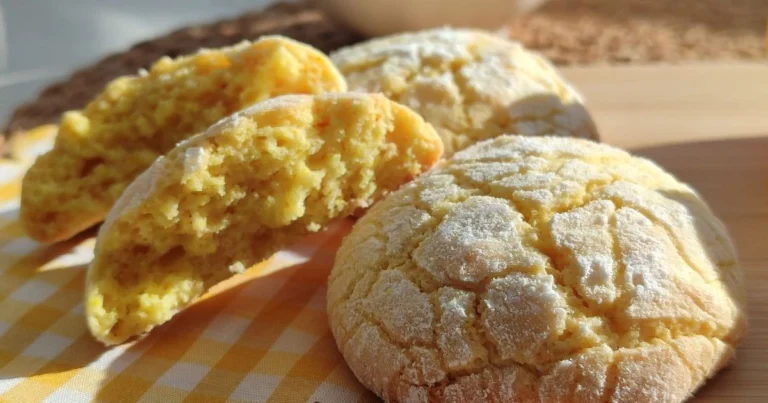
Yellow cake mix cookies are easier to read than white cake mix cookies because the yellow color gives you a visual reference. You are looking for the edges to turn a slightly darker shade of yellow, almost golden. The top of the cookie should still look pale in the center. If the top is golden all the way across, you have baked it too long.
White cake mix cookies are trickier because they are pale to begin with. You cannot rely on color alone. Instead, touch the edge of the cookie gently. It should be set and firm. The center should feel almost soft, almost like it might move if you pressed it. This is the sign that you are at the right doneness level.
If you are not sure, err on the side of underbaking. An underbaked cookie will firm up as it cools. An overbaked cookie stays hard forever.
The Importance of the Carryover Cooking Phase
Here is the secret that separates soft cookies from hard cookies: you do not take the cookies out of the oven and immediately transfer them to a cooling rack. You take them out of the oven and you leave them on the baking sheet for five minutes.
This five-minute rest is called carryover cooking. The residual heat in the baking sheet continues to cook the cookies, and the cookies continue to set as they cool. During this time, the edges firm up further, but the center stays soft. After five minutes, transfer the cookies to a cooling rack with a spatula. They will be firm enough to move without breaking, but still soft inside.
This five-minute wait is the difference between a cookie that is chewy and moist and a cookie that is hard and stale. Do not skip it. Do not rush it. Let the cookies sit on the baking sheet for the full five minutes, then move them. This is non-negotiable if you want soft cookies.
Can You Customize These With Different Mix-ins?
The base recipe is a blank canvas. You can add almost anything to it and the cookies will still turn out well. This is another reason cake mix cookies are so popular. They are endlessly customizable.
The key to adding mix-ins is understanding how much you can add without breaking the dough structure. The base dough is designed for a specific ratio of dry to wet. If you add too many heavy mix-ins, the cookies will not bake evenly. If you add too much moisture, the dough becomes too wet.
The safe limit is about one cup of mix-ins per box of cake mix. This could be chocolate chips, white chocolate chips, crushed candy canes, nuts, sprinkles, or any combination. One cup total. Stir the mix-ins in after the dough is combined, using the same gentle hand-mixing technique you used to combine the dry and wet ingredients.
Incorporating Chocolate Chips and White Chocolate
Chocolate chips are the most obvious addition, and they work beautifully. Use about three-quarters of a cup of chocolate chips per box of mix. The chips will soften slightly in the oven but will not melt completely. They stay intact, creating pockets of chocolate throughout the cookie.
White chocolate chips work the same way. You can use them alone, or you can mix white chocolate chips with dark chocolate chips. Half a cup white chocolate plus half a cup dark chocolate is a classic combination.
If you want white chocolate more prominent, use three-quarters of a cup of white chocolate chips and one-quarter cup of dark chocolate chips. Or reverse it if you prefer dark chocolate. The ratio is flexible. What matters is that the total does not exceed one cup.
One detail: if you are using white chocolate, make sure it is actual white chocolate, not white chocolate-flavored coating. Real white chocolate contains cocoa butter. Coating does not. Real white chocolate will soften and blend slightly with the cookie. Coating will stay hard and plasticky.
Creating Swirl Patterns with Food Coloring
If you want to make these cookies look fancy and special, divide the dough into two or three portions and tint each portion with food coloring. Then scoop the colored doughs onto the baking sheet in a pattern, so each cookie has stripes or swirls of color.
To do this, divide the dough into two portions. Keep one portion plain. Mix gel food coloring (liquid food coloring will make the dough too wet) into the other portion until you reach the color you want. Then scoop alternating scoops of plain and colored dough onto the baking sheet. You can arrange them in a checkerboard pattern, or you can scoop them in stripes, or you can just scatter them randomly. The cookies will bake up with visible color variation.
If you want to create actual swirls within a single cookie, scoop a large dollop of one color onto the baking sheet, then scoop a dollop of the second color on top or next to it. Use a toothpick to swirl the two colors together. This takes a bit of practice, but once you get the hang of it, it looks beautiful.
The key is not to overmix the colored dough. Add the food coloring and stir just until the color is evenly distributed. If you keep mixing, the color will become muddy and the dough will develop gluten.
Frequently Asked Questions
Can You Use Cake Mix Cookies Recipe With Any Flavor of Cake Mix?
Yes, you can use almost any flavor of cake mix. Yellow cake mix and white cake mix are the most popular, but you can also use chocolate cake mix, lemon cake mix, strawberry cake mix, or any other flavor. The ratio of eggs and oil stays the same. The baking time stays the same. The only thing that changes is the flavor profile of the finished cookie. Chocolate cake mix creates a chocolate cookie. Lemon cake mix creates a lemon cookie. The method is identical.
How Do You Keep Cake Mix Cookies Soft?
The main factor is not overbaking. Pull the cookies out when the edges are set but the center still looks slightly underdone. The second factor is storage. Keep them in an airtight container at room temperature. A piece of bread or half an apple can be added to the container to help maintain moisture, though this is not essential. Cake mix cookies stay soft for at least a week without any special storage tricks because of the cornstarch and emulsifiers in the mix.
What Is the Difference Between Yellow Cake Mix and White Cake Mix Cookies?
Yellow cake mix contains butter flavoring, which gives the cookies a richer, more buttery taste. White cake mix is neutral in flavor, so the cookies taste more like pure sugar. Yellow cake mix cookies work better if you want a classic, rich sugar cookie flavor. White cake mix cookies work better if you plan to frost them heavily or if you want a blank canvas for other flavors. Both are delicious. The choice depends on your preference.
Do You Need to Chill Cake Mix Cookie Dough Before Baking?
No, you do not need to chill the dough. Cake mix cookies bake up well whether you chill the dough or not. Chilling for 30 minutes does help the cookies hold their shape slightly better and spread a bit less, but it is optional. If you are in a hurry, you can bake them straight from the bowl.
Can You Make Cake Mix Cookies Without Eggs?
You can, but you need to use an egg substitute. For each egg, use three tablespoons of applesauce, three tablespoons of mashed banana, or a commercial egg replacer product mixed according to package directions. The cookies will have a slightly different texture, but they will still turn out well. Applesauce is the most reliable substitute because it adds moisture without adding strong flavor.
How Long Do Cake Mix Cookies Last?
Cake mix cookies stay soft and fresh for at least one week in an airtight container at room temperature. They can last up to two weeks if stored properly. You can also freeze them for up to three months. Thaw them at room temperature before serving. The cornstarch and emulsifiers in the cake mix prevent them from drying out quickly, which is why they stay soft longer than traditional homemade cookies.
What Is the Best Way to Decorate Cake Mix Sugar Cookies?
Royal icing is the gold standard for decorating these cookies. Mix powdered sugar with egg whites or meringue powder and water, then pipe or dip the cookies in the icing. You can add sprinkles, pearl dust, or food coloring to the icing for different effects. Alternatively, you can frost the cookies with buttercream frosting or cream cheese frosting. Both work beautifully on cake mix cookies.
Can You Double the Cake Mix Cookie Recipe?
Yes, doubling the recipe is simple. Use two boxes of cake mix, four eggs, and one full cup of vegetable oil. Mix them together the same way you would mix a single batch. The baking time stays the same, but you will need to bake two batches instead of one. Alternatively, if your oven is large enough, you can bake both batches at the same time on separate racks, though you may need to rotate the baking sheets halfway through to ensure even baking.
Put The Mix Down
The industry secret is not that cake mix cookies are cheating. It is that they are precision. You are not fighting the dough. You are not guessing at hydration or leavening. You are following a formula that was engineered to work, and then you are making it your own with vanilla, extract, chocolate chips, or royal icing.
What started as a shortcut has become the fastest, most reliable way to make cookies that taste like they came from a bakery, stay soft for days, and require almost no skill to execute. The box does the hard part. You do the easy part. The result is a cookie that tastes like you actually know what you are doing, even if you are making them for the first time.
Start with one box. Two eggs. Half a cup of oil. Nine minutes in a 350-degree oven. That is all you need to understand that this is not a compromise. It is a better way.